
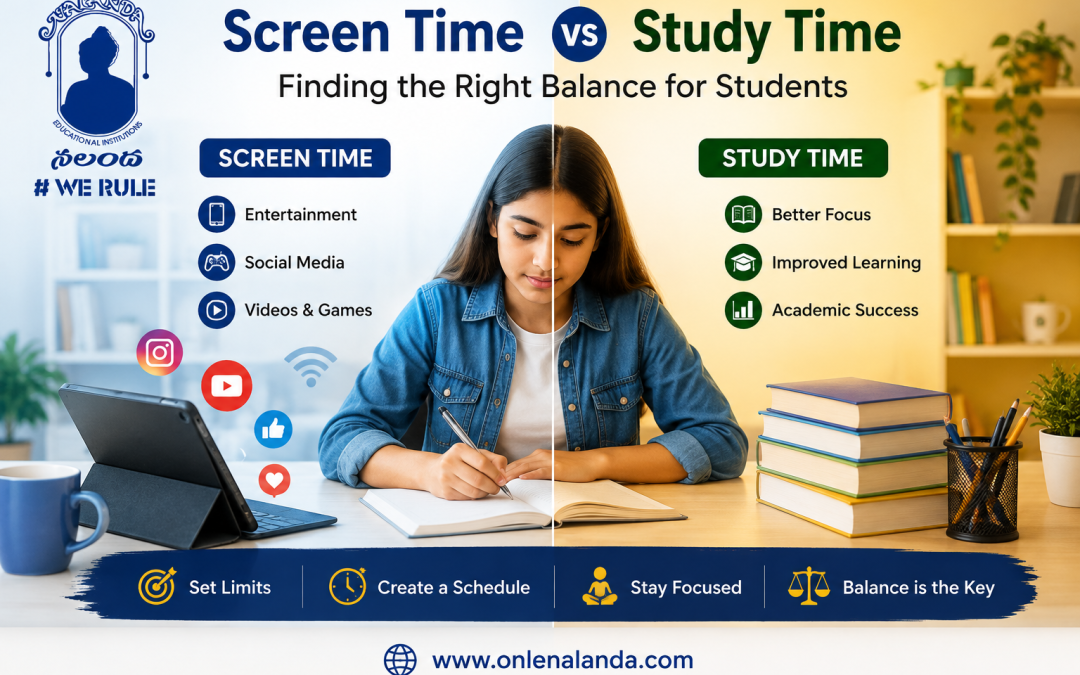
All parents can identify with the following scenario. One would think that when one enters their kid’s room, they would see books and school assignments scattered on the table. Instead, they would find the phone on the table, with an unfinished assignment beside it and YouTube playing on the screen. This is neither rebellion nor lack of discipline, but just life today. Screen time cannot be avoided, and this should be accepted; the real issue becomes how one makes kids form a relationship between screen time and studying time.
Why This Balance Is Harder Than It Used to Be
Whereas in the past, distractions would have been the TV in another room or a call from a friend through a landline phone, now a single device used by children for taking online classes, doing research, and typing up assignments is the same device that pings with alerts and invites kids into a constant barrage of video clips. Using a screen for schoolwork and using a screen instead of schoolwork are indistinguishable at this point in time, making this truly a unique challenge compared to previous generations.
This also implies that absolute policies such as “no screen time at all” always work against themselves. There are too many cases where the screen is part of researching, collaborating, and even relaxing after a hard day. It is not about limiting but rather making kids aware of when a screen helps them and when it takes over.
Signs the Balance Has Tipped
It can be difficult to know when screen time has become encroaching on study time. Some things that might indicate this is happening:
- Homework that should take an hour suddenly takes three, with constant “just checking something” breaks.
- Reduced attention spans when reading and completing tasks that do not involve screens.
- Later bedtimes are often linked to using the phone before bed.
- Bad moods and refusal to stop using the device, rather than just to do the task.
All of the above things by themselves are not reasons to worry, but signs that now is the right time to adjust the timetable, rather than having one more argument about “five more minutes.”
How to Rebalance Your Child
1. Distinct screen time for school and scrolling
Try to make sure that, if possible, your child uses other programs, browsers, or even different gadgets for studying and entertainment. When everything is combined in one tabbed screen, willpower usually cannot help you to resist.
2. Develop a screenless studying routine
A simple 25–30-minute single-task study session, a kind of Pomodoro technique, helps to build an extended attention span faster than studying with pauses and interruptions.
3. Don’t limit time but rather specify the times during which screens are off-limits
Limiting time to “no more than two hours of screen time” is a rule that can be easily circumvented. Instead, it would be more productive to set the times at which the screens are off-limits.
4. Try to ensure that offline activities are fun
If your children enjoy playing sports, reading paper books, or board games, then encouraging these offline activities can be more effective than using smartphone access as a reward or punishment.
5. Lead by example
Children can tell when the “no cell phones at the table” rule is for everybody by the parent setting the example.
Where Technology Actually Helps
It is fair to emphasize that the problem lies not in screens themselves but in their misuse in the process of studying. Modern educational applications, smart classroom tools, video lectures, and online searches for information make studying much more flexible and effective compared to before. Many schools use interactive tools simply because they facilitate studying in a way that textbooks cannot do. The problem did not lie in technology at all; the problem was the struggle between leisure screen time and productive studying time.
How Schools Like Nalanda Approach This Balance
It should be noted that there are schools where this balance has been achieved within the teaching process itself, instead of relying entirely on the efforts of parents at home. The schools of the Nalanda Educational Institutions chain in the SR Nagar, Ameerpet/Shivbagh, and Borabanda regions, which follow the CBSE syllabus, make use of smart classroom technology in a purposeful way in the learning process, rather than simply through passive entertainment.
What is important about this example is that screens are not an issue per se; the issue is where and when screens are being used. The teaching process that takes place in the classroom can have an effect on the use of screens at home.
Finding What Works for Your Child
There is no universal recipe, since all children are unique both in terms of their temperament and age. Your 9-year-old child and 16-year-old child require totally different treatment. Children need more guidance, while teenagers can spend their time with a child involved in setting boundaries for themselves.
You must stay consistent and have an honest conversation. It is better not to guess at what distracts your child but to simply ask. Some children are addicted to some applications and use them as an addiction, while others use phones as an escape from the hard school assignments.
FAQs
A. There’s no universal magic number; it depends on age, purpose, and what else one could be doing with that screen time. Academic screen time while studying is not as relevant as recreational scrolling, which is where the majority of families experience the actual conflict between sleep and concentration.
A. Not really; good use of screens can help studying time through research, recordings of lectures, and smart class technology in classrooms. The issue here is not the screen but competing applications for entertainment during a time when one should be concentrating on something else.
A. Do it gradually: select just one homework session each day that will be free from all screens (apart from homework itself), and prohibit any mobile devices at meal times and an hour before bedtime. Gradual introduction of any boundaries works better than abrupt changes.
A. There is some difference, as the younger ones usually benefit from the external structure more, while the teenagers prefer making certain boundaries themselves.
A. Look out for poor academic performance, inability to concentrate on anything outside the screen, late bedtime, and irritability when the screen is taken away. In case all these factors come into play, you may want to consider a conversation instead of making another rule.
The Bottom Line
The time spent watching screens and study time are not mutually exclusive. This is not about raising kids who are deprived of their screens, which is both impossible and not necessary, but about teaching them to put down the screen when needed and take it back when they choose to do so. This ability is far more important than counting hours spent anywhere but at a desk.
Follow us on Instagram.
Recent Comments